

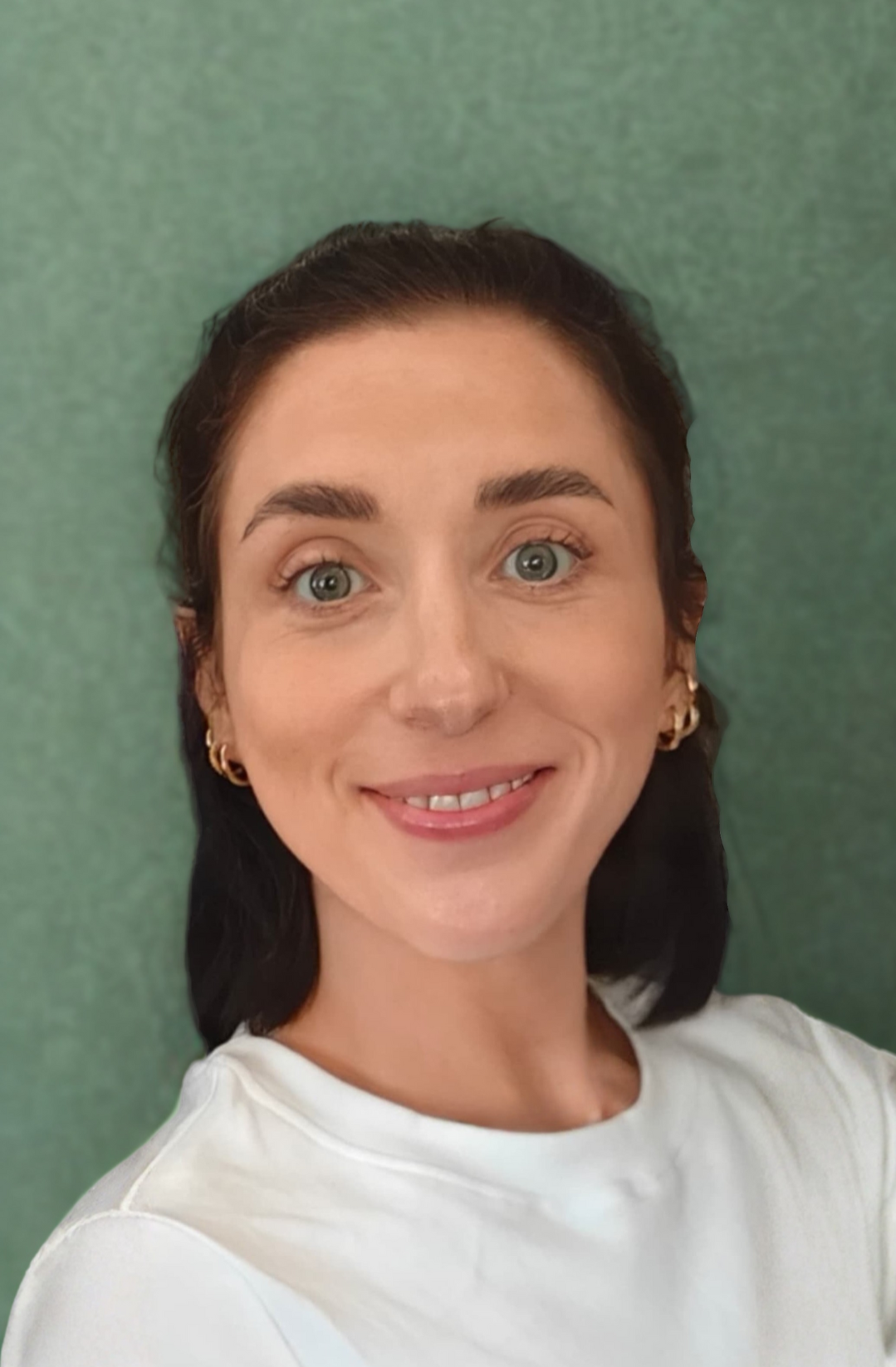
Nice to meet you

Hi, I'm Rebecca.
Most of the people I treat have already tried something. They've been to the GP, done the exercises they were given, maybe had a scan that came back unremarkable. Each step helped a bit, and the thing itself is still there. A fair few arrive half-expecting me to tell them to live with it.
I'd rather find out what's actually going on first.
I'm a Soft Tissue Therapist, qualified at Level 5 in Clinical Soft Tissue Therapy through the ISRM. I trained at the London School of Sports Massage under Mel Cash, who wrote the books this field is built on.
Most massage qualifications in the UK stop at Level 3, which Ofqual rates as equivalent to a single A-Level. Soft Tissue Therapy is taught at Level 5, equivalent to the second year of a degree, and the distance between those two numbers is much further than it looks on paper.
Level 3 is trained around healthy, uninjured bodies, and it does that job well. Level 5 is where you learn to assess an injury properly, to reason back from a symptom to whatever is actually driving it, and to recognise the cases where hands-on work is the wrong call and someone needs a GP instead. It goes considerably deeper on anatomy and neurophysiology, and it covers contemporary pain science. It's also examined properly, with written papers, practical assessment and supervised case work on real clients rather than on classmates.
So if you're carrying an injury or managing something long-term, you don't need to ring ahead and check whether I can take you on. That's the work I'm trained for.
Before this
Before I retrained, I spent years working alongside doctors and surgeons in the NHS and in private healthcare. I picked up training along the way in areas like neurology, orthotics and pain management, and I learned from some genuinely excellent consultants.
I also saw where the system runs out of road. Not through anyone's fault particularly, but because it's built in silos, and a person in pain doesn't arrive in neat sections. I met people who'd been told, with real confidence, that nothing more could be done, when what they'd actually reached was the edge of one specialism.
It's why I take a proper history before I put a hand on anyone.
How I work
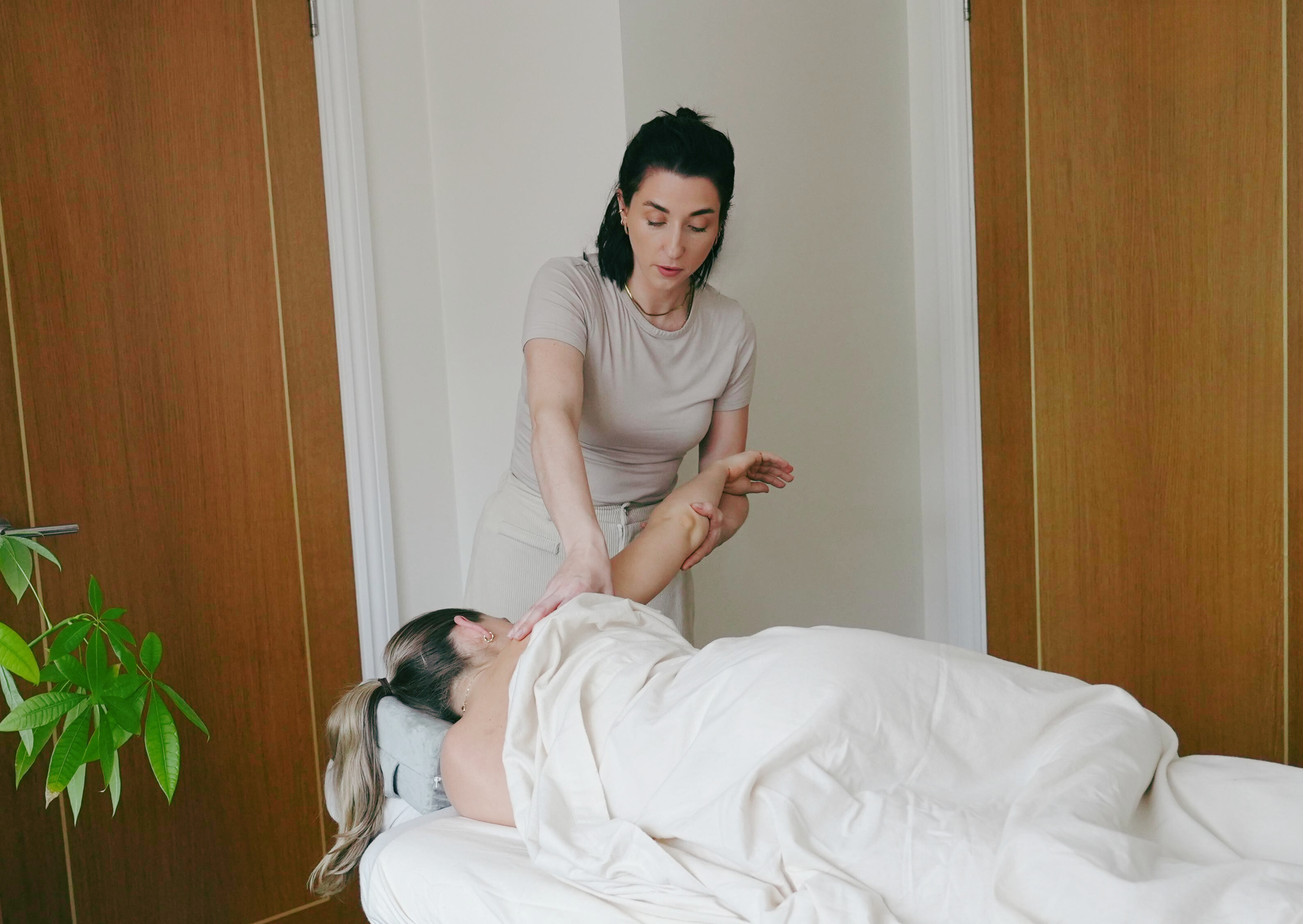
Every session starts with an assessment. I'll ask about your history, watch how you move, and test what's restricted, because I can't treat a problem sensibly until I have some idea why it's there. Then I treat, and the treatment keeps feeding back into the picture. What I feel under my hands tells me as much as any movement test.
I'll explain what I'm doing as I go. If there's something useful you can do between sessions, you'll get one or two things that fit into your actual life, not a programme you'll abandon by Thursday.
Diagnosis sits outside my scope and I won't pretend otherwise. If I think you need a GP, a physio or a consultant, I'll tell you, and I'd rather tell you early than let you find out slowly.
What happens next
Everyone starts with the Foundation Session. Two hours, £99, in your own home. Roughly half of it is working out what's going on and the rest is treating it, so you leave having been properly treated rather than just assessed.
There's no obligation to book anything after that. Some people need one session, others do better with regular work, and we won't really know which until your body has had a chance to respond.
Contact me
Interested in professional collaboration? Fill out some info and I will be in touch shortly.
You can also contact me directly by email rebecca@arden.clinic